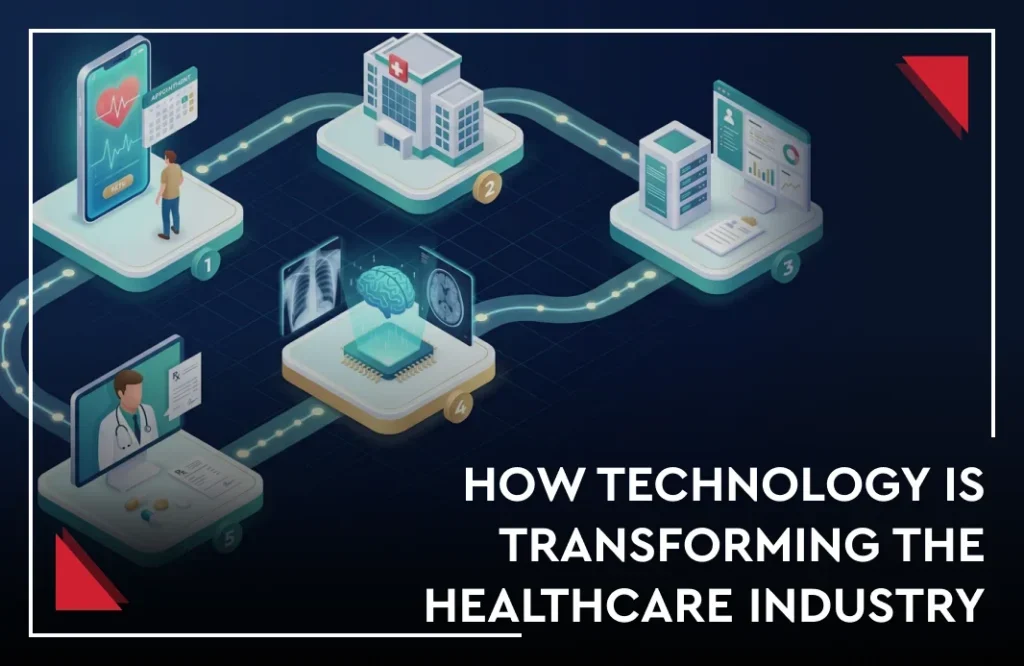
Healthcare is changing faster than ever. Hospitals, clinics, diagnostic centers, pharmacies, insurance providers, and public health systems are all moving toward more digital, connected, and patient-centered models of care, often described broadly as healthcare technology or digital health.
A few years ago, healthcare technology was mostly associated with hospital software, electronic records, or appointment systems. Today, the role of technology is much broader. It supports patient apps, telemedicine, telehealth, remote patient monitoring, hospital management systems, digital records, AI diagnostics, clinical decision support, patient communication, insurance workflows, and real-time health data exchange.
This shift is especially important in Saudi Arabia, where healthcare transformation is closely linked with Vision 2030. The Kingdom is investing in digital health, virtual care, patient platforms, AI, and connected healthcare infrastructure to improve access, quality, efficiency, and patient experience. The Saudi Ministry of Health’s eHealth strategy states that healthcare delivery has historically been characterized by “islands of non-sharable patient data,” and that eHealth is designed to support comprehensive patient management across the Kingdom.
For healthcare providers, this creates both opportunity and responsibility. The opportunity is to serve patients faster and better. The responsibility is to build secure, reliable, and integrated digital systems that support safe healthcare delivery.
Why Healthcare Technology Matters Now
Healthcare systems today face pressure from many directions. Patients expect convenience. Doctors need better access to information. Hospitals need operational efficiency. Governments need stronger public health systems. Insurance providers need smoother claims workflows. Administrators need accurate data for planning and performance tracking. Technology helps address these needs by connecting people, processes, and information.
In Saudi Arabia, this transformation is already visible. Seha Virtual Hospital announced that it delivered more than 16 million virtual appointments and medical consultations during 2025, reflecting the scale of digital healthcare adoption in the Kingdom. The 2025 Health Sector Transformation Program report also highlighted that more than 31 million users benefited from the Sehhaty app, while Seha Virtual Hospital expanded services to more than 365,000 beneficiaries through a network of 241 connected healthcare facilities.
These figures show that healthcare technology is not a future idea. It is already becoming part of everyday healthcare access.
Use Case 1: Patient Apps
Patient apps are one of the most visible examples of healthcare transformation. They give patients access to healthcare services directly from their mobile phones.
A strong patient app can allow users to book appointments, view prescriptions, access lab reports, receive reminders, consult doctors virtually, manage family profiles, track health data, and communicate with healthcare providers. For patients, this improves convenience. For providers, it reduces manual coordination and improves engagement.
Saudi Arabia’s Sehhaty platform is a strong example of how patient apps can become central to healthcare access. The Ministry of Health has also stated that apps such as Seha, Tetamman, and Mawid were merged into Sehhaty to simplify access to healthcare services. For private healthcare businesses, the lesson is clear. Patients increasingly expect healthcare access to be digital, simple, and mobile-friendly.
Use Case 2: Hospital Management Systems
Hospitals are complex organizations. They need to manage appointments, doctors, departments, beds, medical records, billing, insurance, pharmacy, diagnostics, inventory, staff schedules, and patient communication. Without a strong hospital management system, these processes become fragmented. Patients wait longer. Staff repeat manual work. Reports take time. Records may be difficult to access. Coordination between departments becomes slow.
A hospital management system helps connect these workflows into one platform. It can improve patient registration, appointment scheduling, doctor allocation, billing, pharmacy coordination, laboratory management, discharge processes, and reporting. The Ministry of Health’s eHealth plans include deploying national health information systems across hospitals, healthcare centers, and specialized centers, as well as supporting data exchange between health service providers.
This reflects a major direction for the healthcare sector: connected systems are becoming essential for better care delivery.
Use Case 3: Electronic Health Records and Health Data Exchange
Healthcare quality depends heavily on access to accurate patient information. Doctors need to know patient history, medications, test results, allergies, diagnoses, and previous treatments. If this data is scattered across systems, care becomes slower and riskier.
Electronic health records help create a more complete patient view, often delivered through EMR software that doctors and administrators can access directly instead of paper charts. Health data exchange allows different providers to share information securely when needed.
Saudi Arabia’s eHealth strategy emphasizes the importance of making comprehensive patient management a reality and addressing the problem of non-shareable patient data. The Ministry’s eHealth infrastructure guidance also highlights secure connections between healthcare facilities and the need for authorized providers to access patient records on a need-to-know basis.
For healthcare organizations, this means technology must be designed with both accessibility and security in mind.
Use Case 4: Telemedicine, Telehealth, and Virtual Care
Telemedicine, often called telehealth, became more important after the pandemic, but it has now moved beyond emergency use. Both terms describe the same shift: care delivered remotely through secure digital channels, and it is becoming a long-term part of healthcare delivery. Virtual care allows patients to consult doctors without traveling. This is especially valuable for follow-ups, chronic condition management, mental health support, general consultations, and patients living far from specialized hospitals.
Seha Virtual Hospital’s 16 million virtual appointments and consultations in 2025 show how large-scale virtual care can improve access across the Kingdom.
For healthcare providers, virtual care platforms can reduce pressure on physical facilities, improve patient convenience, and extend specialist access to more locations. However, these platforms need secure video consultation, patient records, prescription workflows, appointment systems, and follow-up tracking to work effectively.
Use Case 5: AI Diagnostics and Clinical Decision Support
Artificial intelligence is becoming one of the most important healthcare technologies. AI can support diagnostics, image analysis, triage, risk prediction, patient monitoring, and clinical decision-making.
Saudi Arabia is already moving in this direction. The National Platform reported that the Saudi healthcare sector witnessed agreements to launch an AI Physician experience to support accurate diagnosis and improve clinical decision-making, along with a smart health coach in cooperation with Google through the Sehhaty app.
AI does not replace doctors. It supports them by helping analyze information faster, identify patterns, and improve decision support. For example, AI can help flag high-risk cases, analyze medical images, recommend next steps, or support preventive care.
But AI in healthcare requires strong data governance, privacy protection, clinical validation, and human oversight. Accuracy and trust are critical, so providers evaluating AI diagnostics should look for clinical validation and regulatory approval, not just impressive demo results.
Use Case 6: Remote Patient Monitoring and Preventive Healthcare
Healthcare is moving from reactive care to preventive care. Instead of only treating illness after symptoms become severe, digital systems can help monitor health indicators and identify risks earlier. Remote patient monitoring can support patients with chronic conditions such as diabetes, hypertension, heart disease, and respiratory issues. Wearables, connected devices, and patient apps can collect data and share it with healthcare providers.
This allows doctors to track patients more continuously and intervene earlier when needed. For hospitals and clinics, remote patient monitoring can reduce unnecessary visits and improve long-term patient care. As Saudi Arabia continues to invest in virtual care and digital health platforms, remote patient monitoring will likely become a stronger part of patient-centered healthcare.
Use Case 7: Healthcare Payments and Insurance Integration
Healthcare is not only clinical. It also involves billing, payments, claims, approvals, insurance verification, and financial reporting. Digital systems can simplify these processes by integrating patient records, medical billing software, insurance platforms, payment gateways, and approval workflows. This reduces manual paperwork and improves transparency for both patients and providers.
For healthcare businesses, this creates operational efficiency. For patients, it improves clarity around payments, coverage, and claims. A connected healthcare CRM can also keep patient communication, billing status, and insurance approvals in one record instead of three separate systems. Healthcare apps and systems should not treat payment as an afterthought. It should be part of the full patient journey.
The Biggest Mistake Healthcare Businesses Make
The biggest mistake healthcare businesses make is building disconnected digital tools. A clinic may have one app for booking, another tool for billing, separate software for records, and manual systems for follow-ups. This creates the same problem technology was supposed to solve: fragmentation. Healthcare technology works best when systems are connected. Patient apps, hospital management systems, electronic health records, telemedicine platforms, billing systems, and dashboards should work together.
The goal is not just digitization. The goal is better care coordination.
How Ewaantech Helps Healthcare Businesses Build Digital Solutions
At Ewaantech, healthcare technology development, including healthcare app development, healthcare mobile app development, and healthcare software development, is approached with a focus on usability, security, integration, and patient experience, because a clinical tool that is hard to use rarely gets adopted no matter how advanced it is.
Through services such as mobile app development, web app development, custom software development, hospital management systems, patient portals, appointment booking systems, AI development, healthcare CRM and ERP integration, cloud-based systems, and digital transformation consulting, Ewaantech helps healthcare businesses build scalable digital solutions. The goal is to support healthcare providers with systems that improve access, reduce manual work, strengthen patient communication, and create better operational visibility.
Conclusion
Technology is transforming healthcare by making services more accessible, connected, efficient, and patient-centered. Patient apps, hospital systems, electronic records, telemedicine, telehealth, AI diagnostics, remote patient monitoring, and digital payment workflows are all becoming part of modern healthcare delivery. For Saudi Arabia, this transformation is already visible through national digital health platforms, virtual care growth, and AI-enabled healthcare initiatives.
Healthcare businesses that invest in connected digital systems, from healthcare app development to hospital management systems, will be better prepared to serve patients, improve efficiency, and support future growth.