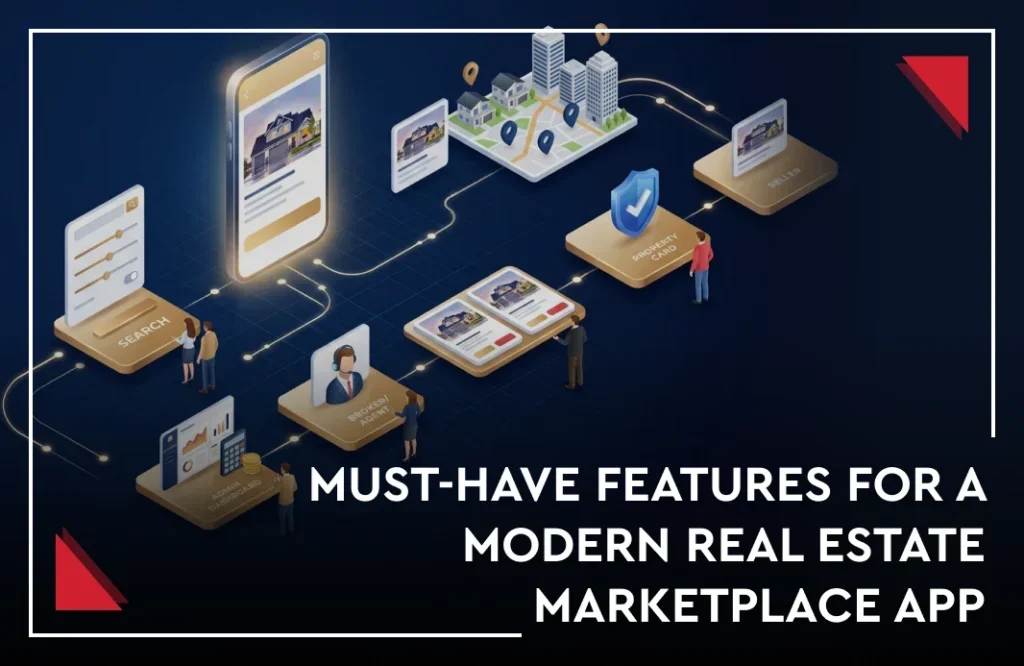
Real estate marketplaces are becoming one of the most important digital tools in the property industry. Buyers no longer want to depend only on office visits, phone calls, or broker networks. Sellers want stronger visibility for their properties. Brokers want better lead management. Developers want scalable digital sales systems. Investors want reliable data. Tenants want quick access to verified rental options.
This is why real estate marketplace app development is becoming increasingly important in Saudi Arabia. A modern real estate marketplace is not just a website with property photos. It is a connected platform where buyers, sellers, brokers, agents, developers, and admins can manage the property journey digitally.
Saudi Arabia’s real estate sector is also becoming more regulated and technology-enabled. The Real Estate General Authority launched the Saudi PropTech Hub to empower the Kingdom’s PropTech ecosystem and foster innovation across the real estate sector. For real estate businesses, this creates a clear opportunity. Companies that invest in reliable, user-friendly, and integrated marketplace platforms can serve customers better and manage property transactions more efficiently.
Why Real Estate Marketplace Apps Matter
Real estate decisions are complex. Buyers compare location, price, size, developer reputation, property documents, financing options, and future value. Sellers want qualified leads and clear visibility. Brokers need to respond quickly, track communication, and manage site visits. Developers need to manage large volumes of inquiries across multiple projects.
A marketplace app can bring all of this together. It can help users search properties, compare options, contact agents, schedule visits, upload documents, submit financing inquiries, and track their journey through one platform.
This matters even more because Saudi Arabia is actively digitizing real estate services. REGA has licensed 71 electronic real estate platforms with FAL licenses for real estate brokerage and marketing activities after they met requirements and completed technical integration with REGA. This shows that digital real estate platforms are no longer informal listing spaces. They are becoming part of a more structured and trusted real estate ecosystem.
Key Feature 1: Advanced Property Search
Search is one of the most important features of a real estate marketplace. Users should be able to find properties based on their actual needs, not scroll endlessly through irrelevant listings. A strong search system should allow filtering by location, property type, price range, number of bedrooms, property size, rental or sale category, furnished or unfurnished status, amenities, developer, completion status, payment plan, and nearby facilities.
The search experience should feel fast and simple. If users cannot find relevant properties quickly, they may leave the platform. Good search filters improve user experience and increase the chance of inquiry.
Key Feature 2: Map View and Location-Based Search
Location is one of the biggest decision factors in real estate. A property may look attractive, but users also want to understand the surrounding area. They may ask: Is it near schools? How far is it from work? Are hospitals, malls, transport routes, and main roads nearby?
A map view helps users understand property location visually. It can show nearby facilities, neighborhood layout, distance from landmarks, road access, and surrounding development. For Saudi real estate marketplaces, location-based features are especially useful because buyers and tenants often compare areas before comparing individual units. A map-based experience makes the marketplace more practical and easier to use.
Key Feature 3: Verified Listings
Trust is essential in real estate. Users need to know whether a property is real, available, accurately described, and legally appropriate for the transaction. Verified listings help reduce confusion and fraud risk. A marketplace app can support verified listings through admin approval, broker verification, document upload, ownership checks, listing status updates, expiry dates, duplicate listing detection, and verified agent badges.
REGA has emphasized that real estate technologies play a role in improving transparency and efficiency in real estate transactions. It also states that digital platforms require brokers to disclose complete property details, licensing information, and ownership data, helping minimize fraud and secure parties’ rights. For marketplace platforms, this makes verification a business necessity, not just a feature.
Key Feature 4: Detailed Property Pages
A property detail page is where user interest becomes action. It should give buyers, tenants, and investors enough information to evaluate the property confidently. A strong property page should include high-quality photos, videos, property description, price, location, size, floor plan, amenities, nearby facilities, agent details, availability status, payment plan, inquiry button, similar properties, and document status where relevant.
The page should also be easy to read. Users should not have to call an agent just to understand basic details. The more complete the listing, the more qualified the inquiry becomes.
Key Feature 5: Property Comparison
Real estate users rarely decide after viewing one property. They compare multiple options before taking action. A comparison feature allows users to review properties side by side. They can compare price, location, size, amenities, payment plan, developer, availability, property type, and distance from key locations. This improves decision-making and keeps users engaged inside the platform.
For brokers and real estate companies, comparison tools also help understand user preferences. If a user compares multiple properties in the same location or budget range, the sales team can follow up with more relevant recommendations.
Key Feature 6: Lead Routing and Inquiry Management
A marketplace platform must handle inquiries efficiently. When a user submits an inquiry, the system should route the lead to the right broker, agent, developer, or sales team. Lead routing can be based on property location, property type, agent availability, developer project, customer language, lead priority, budget range, or existing customer relationship. This prevents leads from being lost and helps teams respond faster.
Without proper lead management, marketplace platforms can generate inquiries but still fail to convert them. A strong inquiry system should track lead status, follow-up history, customer notes, agent assignment, and response time.
Key Feature 7: Agent and Broker Dashboard
Agents and brokers need more than lead notifications. They need a dashboard that helps them manage the full sales or rental journey. An agent dashboard can include assigned leads, follow-up reminders, property inquiries, customer notes, site visit schedules, deal status, listing performance, communication history, and conversion reports.
This improves productivity because agents can focus on active opportunities instead of manually tracking conversations across calls, WhatsApp messages, and spreadsheets.
Key Feature 8: Seller and Developer Dashboard
Sellers and developers also need visibility into their listings. A seller or developer dashboard can allow users to add properties, upload documents, view listing status, track inquiries, update prices, manage availability, view performance reports, and communicate with brokers. This reduces manual coordination between sellers, developers, brokers, and marketplace admins. It also makes the platform more scalable because property owners can manage their information under proper review and approval workflows.
Key Feature 9: Appointment Booking for Site Visits
Site visits are a major part of real estate decision-making. An appointment booking feature allows users to schedule visits directly from the marketplace. The system can show available time slots, agent calendars, property availability, visit confirmation, rescheduling options, reminder notifications, and visit feedback. This creates a smoother experience for buyers and tenants. It also helps agents manage their time more effectively.
Key Feature 10: Document Upload and Digital Workflows
Real estate transactions involve documents. Buyers may need to submit identification, financing documents, reservation forms, payment receipts, or contracts. Sellers may need to upload ownership documents, property details, and listing approvals. A marketplace app can include secure document upload, document review, missing document alerts, approval workflows, access control, and document history.
Digital documentation is especially important in Saudi Arabia’s real estate ecosystem. Ejar is an integrated electronic network that regulates the rental sector in Saudi Arabia and preserves the rights of tenants, landlords, and real estate brokers. This reinforces the need for real estate apps to support trusted digital workflows.
Key Feature 11: Financing Inquiry
Many buyers need financing support before purchasing property. A financing inquiry feature allows users to express interest in mortgage or financing options directly through the platform. This can include estimated budget, salary range, preferred bank, down payment information, eligibility questions, document upload, and follow-up tracking. For real estate companies, financing inquiries help qualify buyers better. For users, they make the property journey easier because financing is connected with property interest.
Key Feature 12: Admin Control and Reporting
The admin panel controls the marketplace. Admins need to manage user accounts, agent approvals, listing approvals, property categories, featured listings, inquiry tracking, document review, reports, payments, platform settings, and compliance workflows.
A strong admin dashboard also supports business intelligence. It can show which locations receive the most inquiries, which agents respond fastest, which listings perform best, which property types are most popular, and where customers drop off. This helps real estate companies make better decisions and improve marketplace performance over time.
The Biggest Mistake Businesses Make
The biggest mistake businesses make is thinking a real estate marketplace is only about listings. Listings are important, but they are only one part of the platform. A successful marketplace also needs verified listings, search filters, map view, lead routing, agent dashboards, seller dashboards, appointment booking, document workflows, financing inquiries, admin control, and analytics.
The best real estate marketplaces support the full property journey. They help users discover properties, compare options, contact the right people, submit documents, schedule visits, and move toward a decision with more confidence.
How Ewaantech Helps Build Real Estate Marketplace Apps
At Ewaantech, real estate marketplace app development is approached as a complete PropTech solution. The focus is not only on building a listing website or mobile app. The focus is on building a scalable platform that supports buyers, sellers, brokers, developers, and admins.
Through services like web app development, mobile app development, custom software development, marketplace platform development, CRM integration, payment gateway integration, admin dashboard development, cloud-based systems, and digital transformation consulting, Ewaantech helps real estate businesses build platforms that match modern market expectations. The goal is to create a marketplace that is searchable, trusted, efficient, and scalable.
Conclusion
Real estate marketplace apps are becoming essential for modern property businesses. Customers want convenience, transparency, and speed. Brokers need better lead management. Sellers need visibility. Developers need scalable digital sales systems. Admin teams need control and reporting. A well-built marketplace app helps all sides work more efficiently. It turns property discovery, inquiry, documentation, visit scheduling, and lead management into a connected digital journey.
The future of real estate marketplaces in Saudi Arabia will be defined by trust, speed, transparency, and connected workflows. Businesses that build platforms around these expectations will be better prepared for the Kingdom’s digital real estate future.